Flora Raetica relies on the dedication of its volunteers. Through their observations, they make an important contribution to documenting the flora of Graubünden.
In our portrait series, we introduce the people behind Flora Raetica.
Today: Stephanie Goldbach-Aschemann, Sevelen, physicist / laboratory engineer, working for Flora Raetica since 2026.
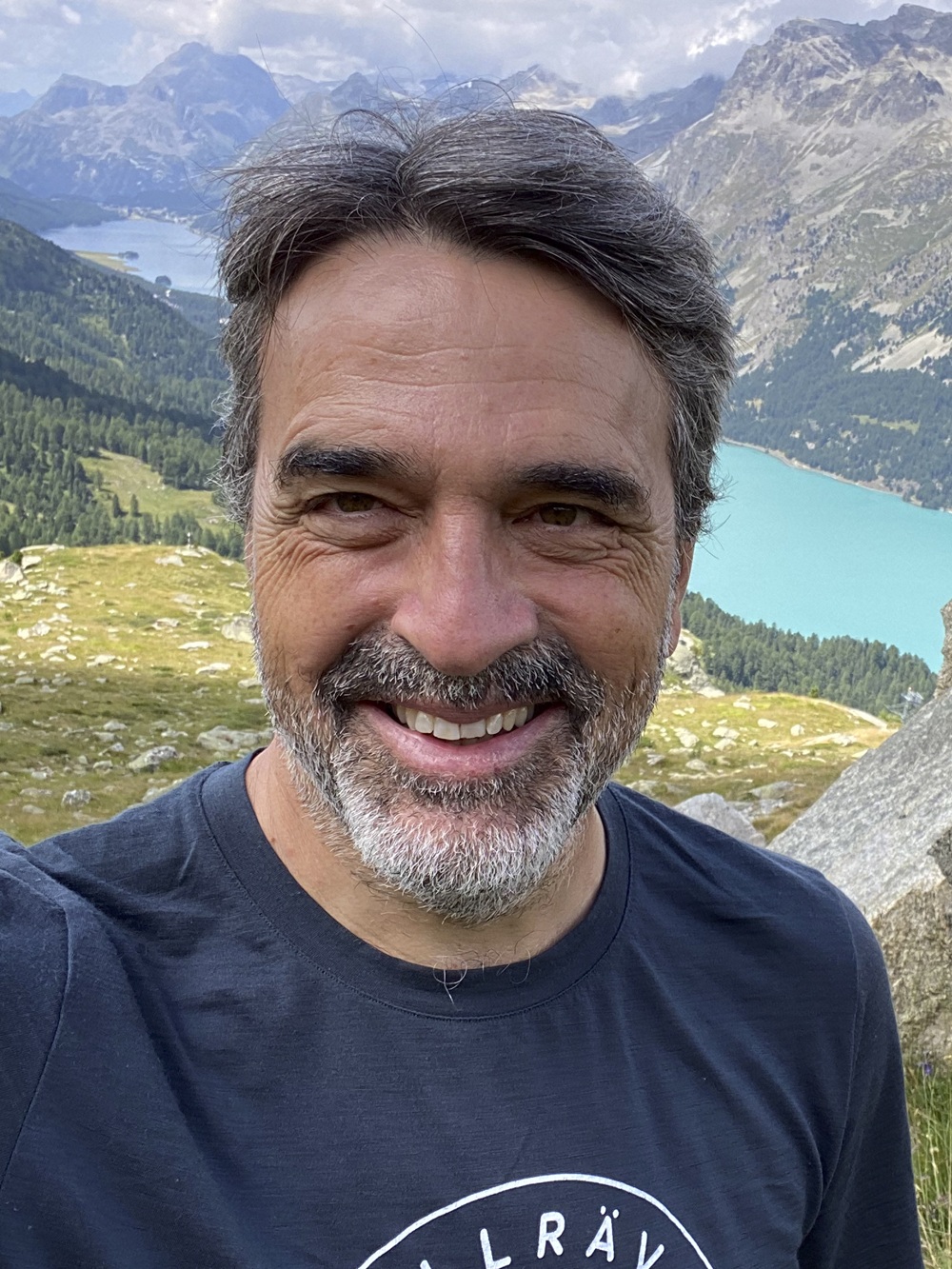
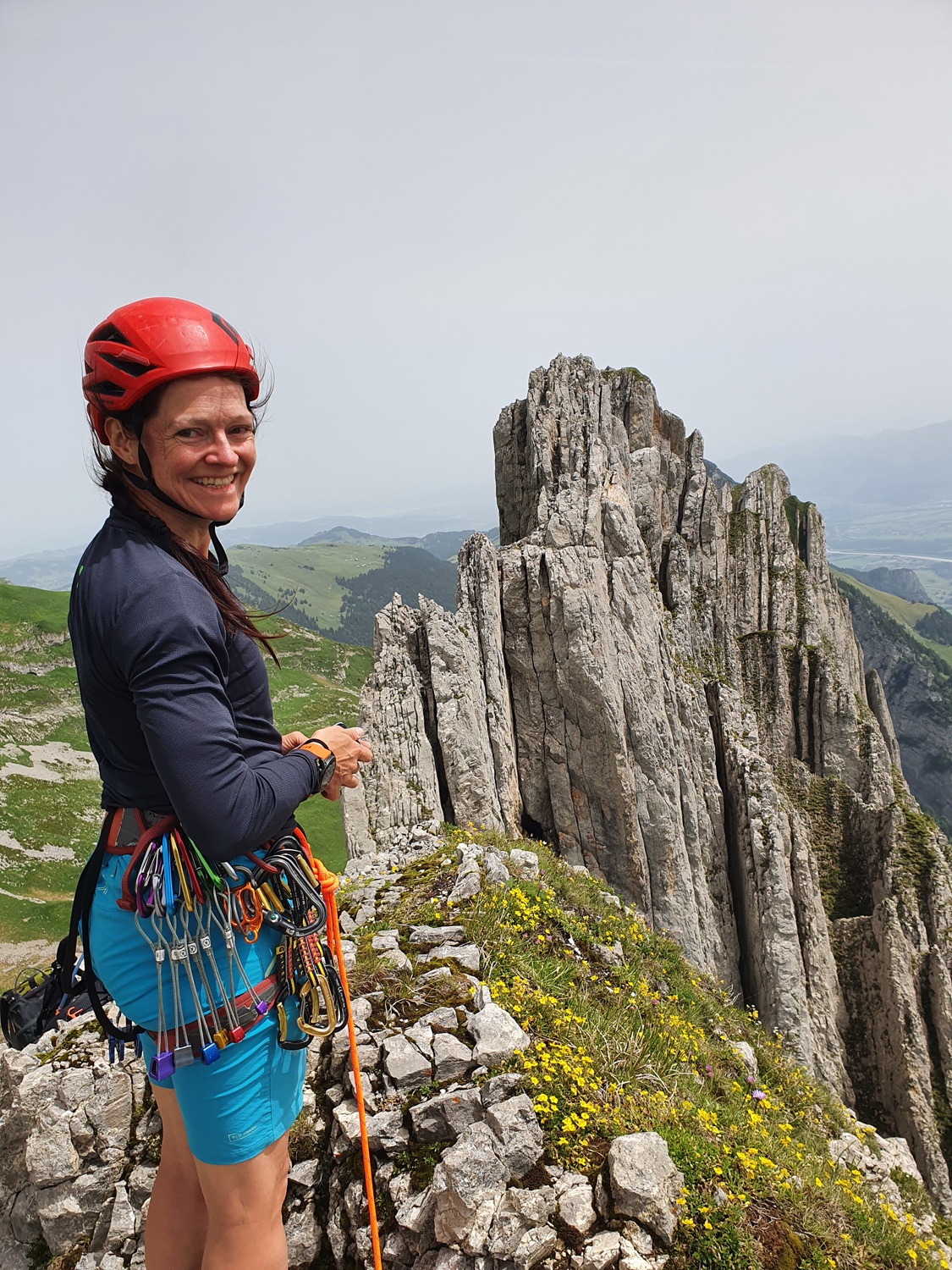
This portrait photo of Stephanie was taken on June 29, 2024, during a climbing trip to Kreuzberg VI in the Alpstein. Photo: Simon Tischhauser.
Stephanie, what fascinates you about being out in nature?
In the past, the focus was mainly on the physical challenge—running and climbing. I still enjoy that, but now I’m increasingly discovering the various aspects of nature as well. For example, I wonder how geology and plants are connected, what that specific grass in the meadow tells us, or why that particular species is more common this year than last. That’s why I’ve taken a few botany courses lately. Otherwise, you tend to just look at the obvious and familiar things, even though there are so many fascinating plants out there.
Do you have a favorite plant that grows in Graubünden? Why that one in particular?
It’s hard for me to name just one. I’m always especially happy to see saxifrage (Saxifraga), butterworts (Pinguicula), and ferns—especially moonworts (Botrychium).
Which season do you find most interesting from a botanical perspective—and why?
May is one of the best times for exploring the outdoors: everything is still very fresh, and there’s already plenty to see. But some plants can be observed all year round—for example, the spotted fern. And when the weather gets really unpleasant, reading books about botany is all the more enjoyable.
Why are you involved with Flora Raetica, and what do you contribute?
I’ve only been involved since March, and my knowledge of botany is still growing. That’s why I’m grateful for any corrections, tips, and other feedback regarding the project. Fortunately, plant observations reported earlier can also be retroactively assigned to the Flora Raetica project starting in 2021, which allowed me to contribute right away. As a book lover, I’d also be very happy to contribute something to the publication marking the 100th anniversary in 2032.
What do you particularly like about working on this project?
I especially enjoy the lively conversation on the Signal chat. It’s always nice to see the discoveries and feel how excited the participants are.
What does a successful day in the field mean to you?
Of course, I’m happy when I discover a rare species or can confirm the presence of a species, but the overall experience is actually even more important to me. In June, for example, I spent two days in the Lower Engadine. Plants, mountains, spending the night in a mountain hut—that’s pure luxury!