

Flora Raetica relies on the dedication of its volunteers. Through their observations, they make an important contribution to documenting the flora of Graubünden.
In our portrait series, we introduce the people behind Flora Raetica.
Today: Stefanie Jacomet, a retired archaeobotanist from Ftan. She has been with Flora Raetica since the project began.
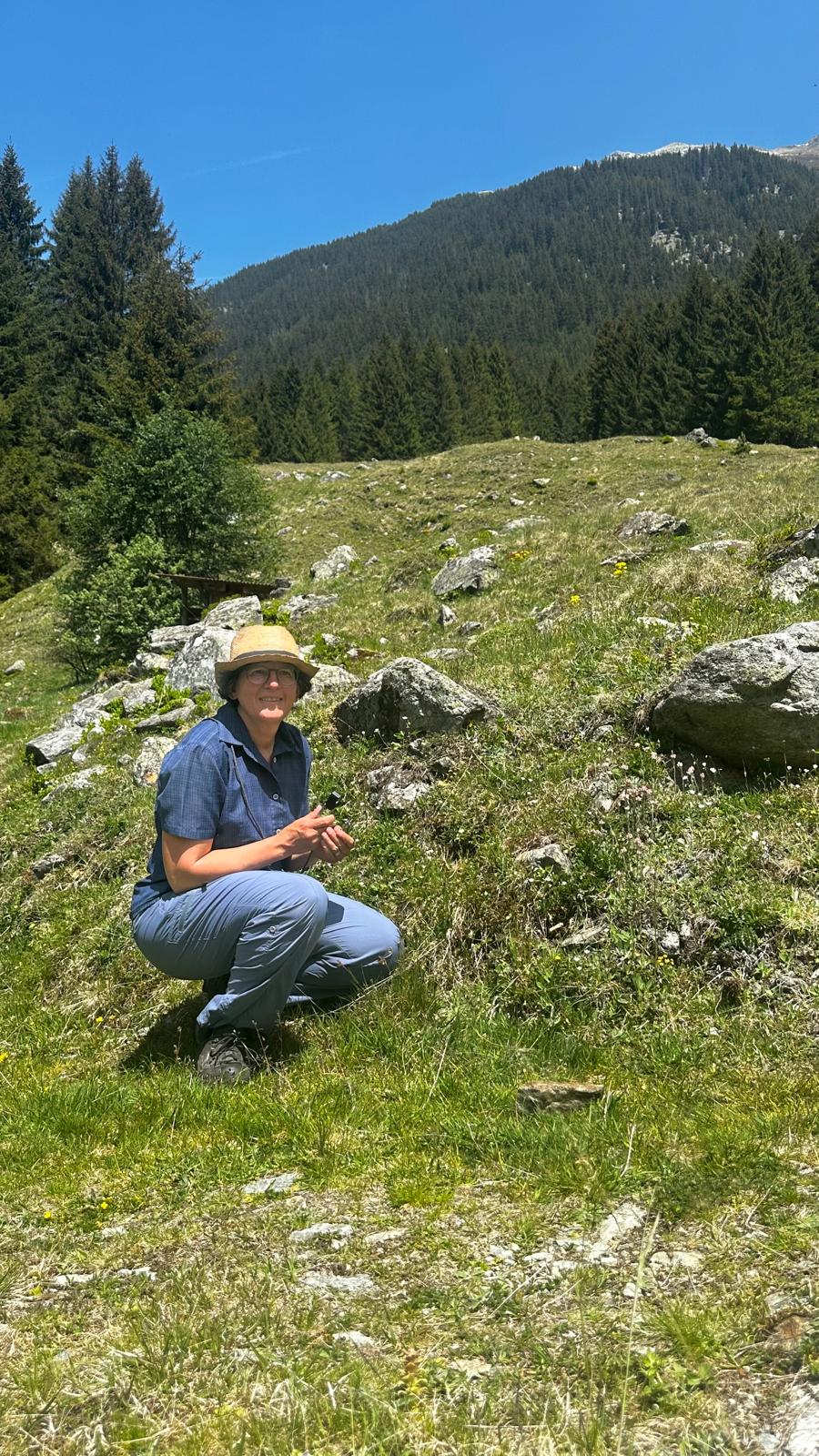
Photo: Jörg Schibler – Stefanie Jacomet on a botanical discovery tour.
Stefi, what do you love about plants?
Pretty much everything! Studying plants is incredibly varied—identifying them, their history over the last few million years, speciation processes, genetic relationships, their ecology… and so much more. And then, of course, many flowering plants are simply beautiful to look at!
How did you get into botany?
I’ve been interested in plants ever since I was a child—I’ll never forget the walks through the forests of Basel-Landschaft with my grandfather; I knew exactly where to find the lily-of-the-valley. In high school, much to our biology teacher’s delight, I was the only one interested in plants—so studying botany seemed like a natural choice!
Do you have a favorite plant in Graubünden?
I’m particularly fascinated by the small, purple-flowering gentians with five petal lobes (sometimes classified as their own subgenus,“Gentianella”). They have been poorly studied in Switzerland so far. I’m interested in where they occur and how they’re related to one another. From this, we might be able to deduce where they survived the ice ages and from which locations they subsequently spread again.
What fascinates you about being out in nature?
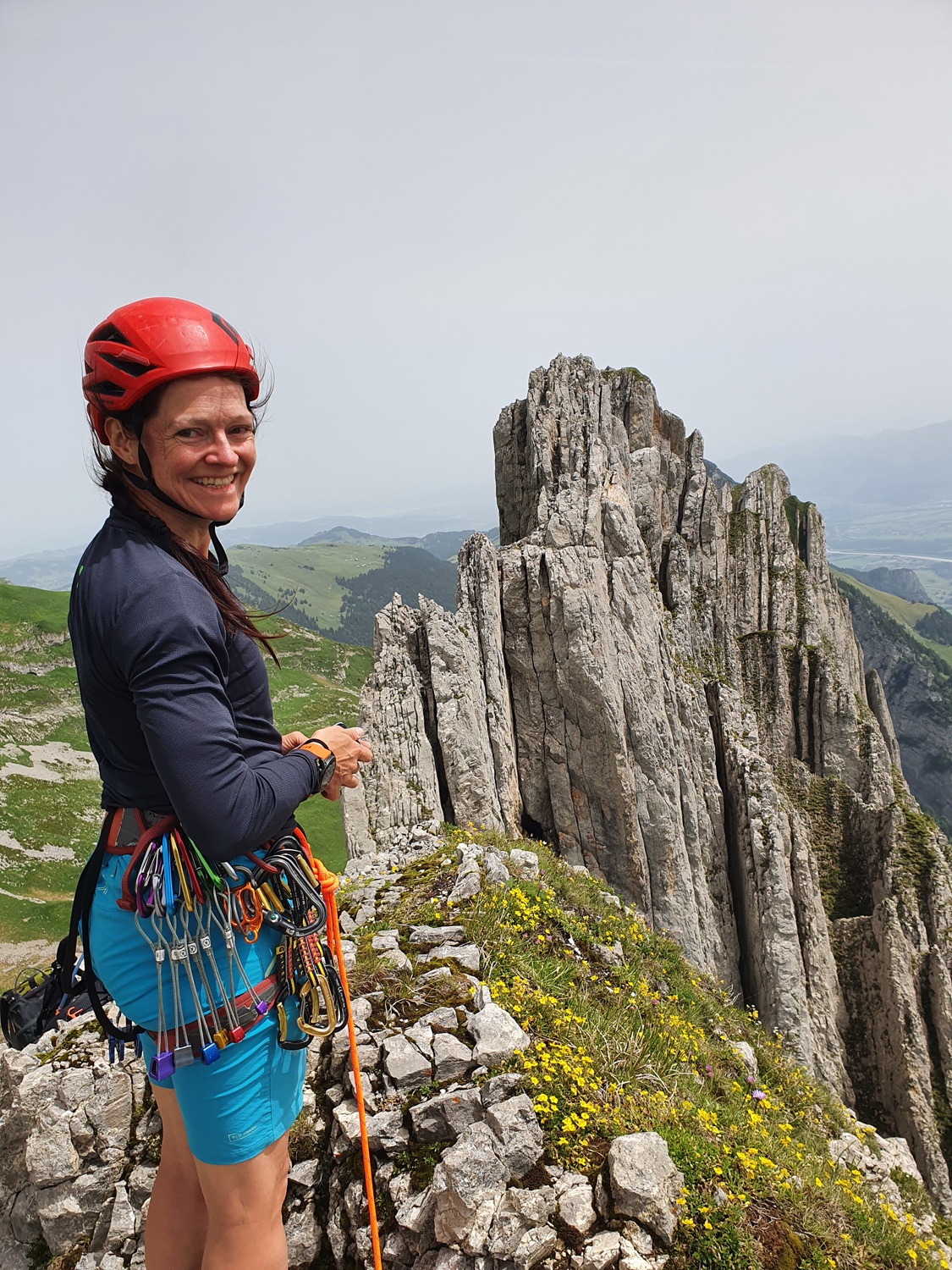
The fresh air—and when you’re farther away from noisy streets, the peace and quiet, too! I love being outdoors, hiking up mountains (at least as long as my legs will let me!), discovering beautiful landscapes—and identifying plants along the way. I find it especially satisfying to successfully (re)discover species. And sometimes you come across the most exciting things in places that seem “boring” at first glance!
Why are you involved with Flora Raetica?
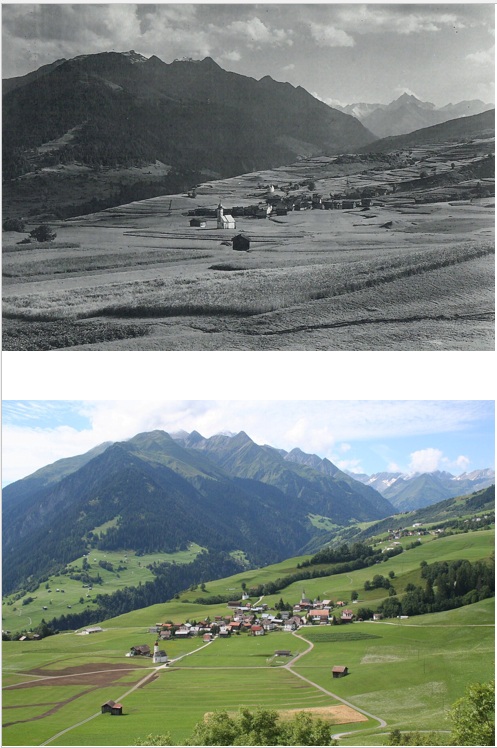
Since I was working in another field, I hadn’t been able to pursue field botany since the late 1990s. After I retired, given my professional background, it made sense to get back into it more intensively. The Flora Raetica project served as a very welcome catalyst for this. Furthermore, I find the idea of publishing a “new edition” 100 years after the first Flora of Graubünden to be very meaningful. I am interested in the changes in the flora that have occurred during this period and the possible reasons behind them.
What is your contribution to Flora Raetica?
I record as many plants as possible and, within the 5x5-kilometer square that I primarily oversee, I focus especially on the “flash squares.” The Lower Engadine, where I’ve lived since my retirement, is very well documented botanically. That’s why I’ve recently been focusing particularly on taxa that are difficult to identify, in order to better document their distribution—such as the small“Gentianella” speciesor the Rhaetian rose. I’m also happy to share the identification guides I’ve compiled with enthusiastic individuals who may not yet be very familiar with plant identification.
What do you like most about working here?
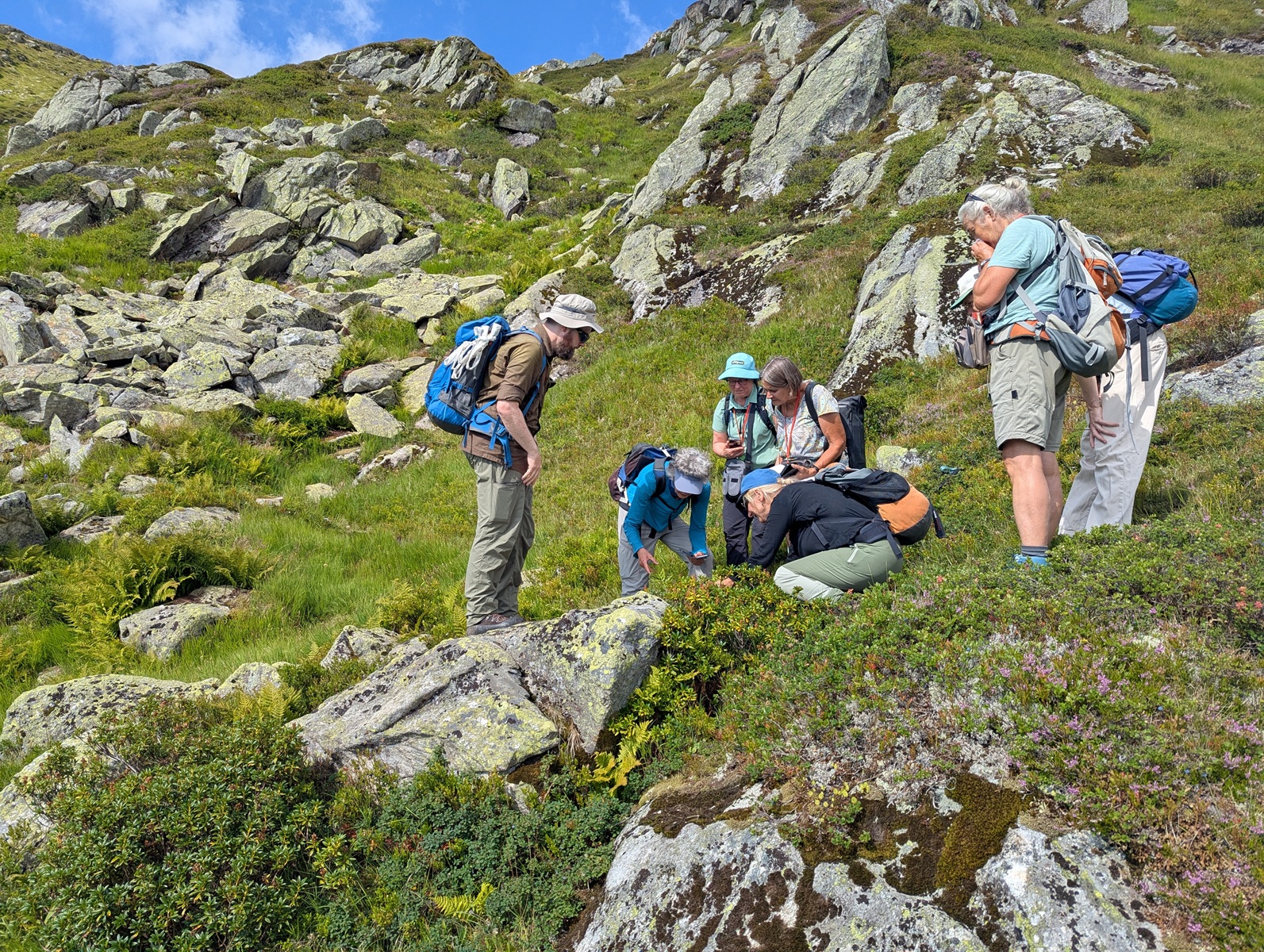
The opportunity to interact with dedicated individuals and field botany specialists, to participate in joint mapping activities, and to feel that I’m doing something meaningful even after retirement—and perhaps even contributing to research.
Was there a discovery or moment outdoors that you’ll never forget?
Gathering plants in the rain and cold (in mid-June…) in a “Blitzquadrat” above Samedan…and discovering there some beautifully blooming pinnate violets (Viola pinnata)!
Do you have a personal botany tip for Graubünden?
The flora of Graubünden is generally incredibly diverse and abundant! I find avalanche tracks particularly fascinating. They’re often teeming with species and can yield surprising discoveries, such as large populations of fire lilies or feather-leaved violets. Unfortunately, these areas are usually steep and lack trails—so they’re not exactly “comfortable” for botanical exploration…! And that’s why they’re, unfortunately, somewhat under-researched…