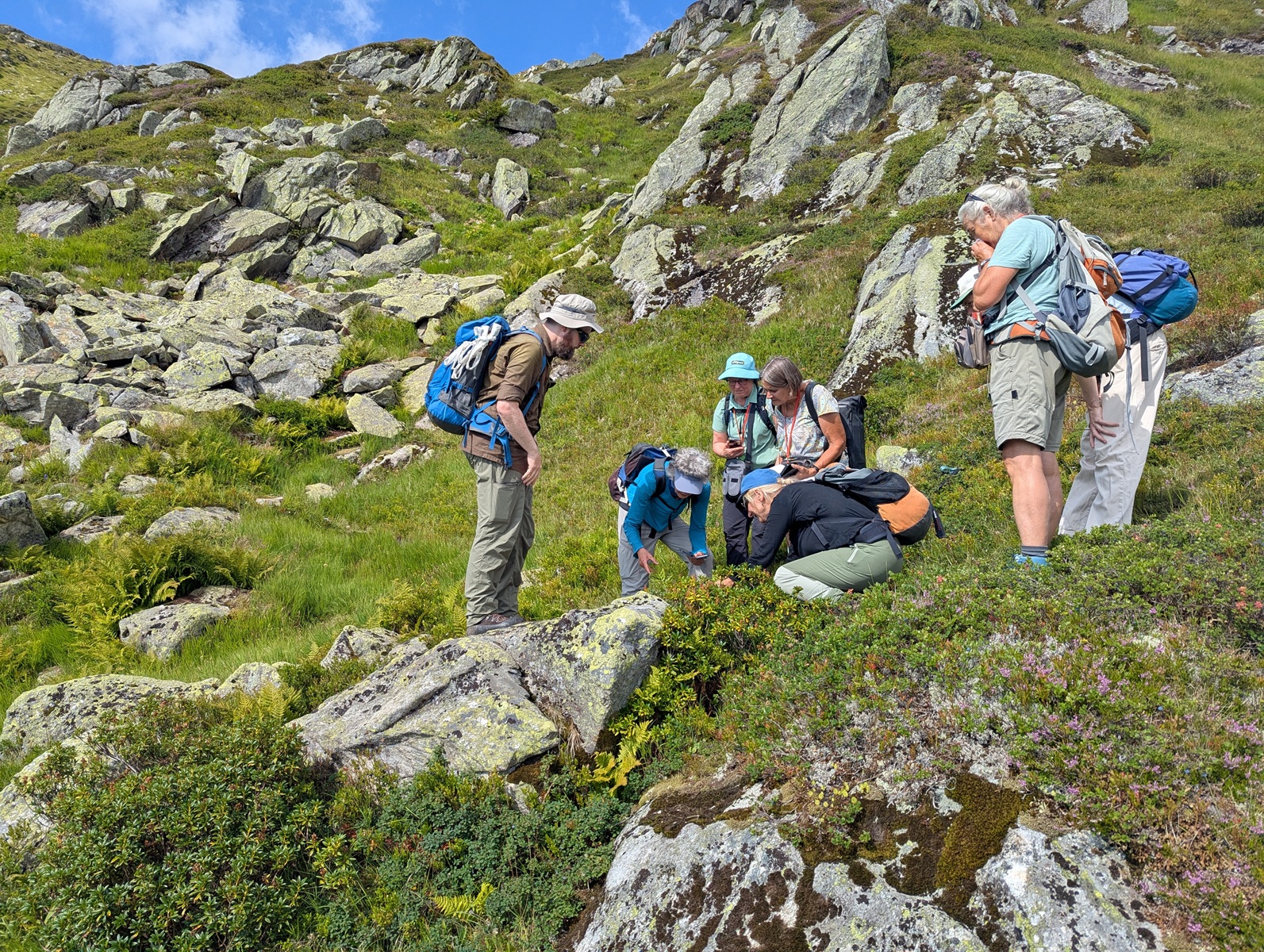
Over the course of three days, 25 volunteers in the Puschlav region collected as many plant specimens as possible during field trips, “Mission Discover” activities, and rapid inventories. The results are impressive: In the 5x5-km square around Piz Cancian, the coverage rate rose from 0 to 88 percent, with 326 plant species now documented there. The Flora Raetica project also made significant progress in the Piz dal Teo square: the coverage rate increased from 17 to 69 percent, and the number of reported species grew from 44 to 259.
Rare Species and Valuable Records
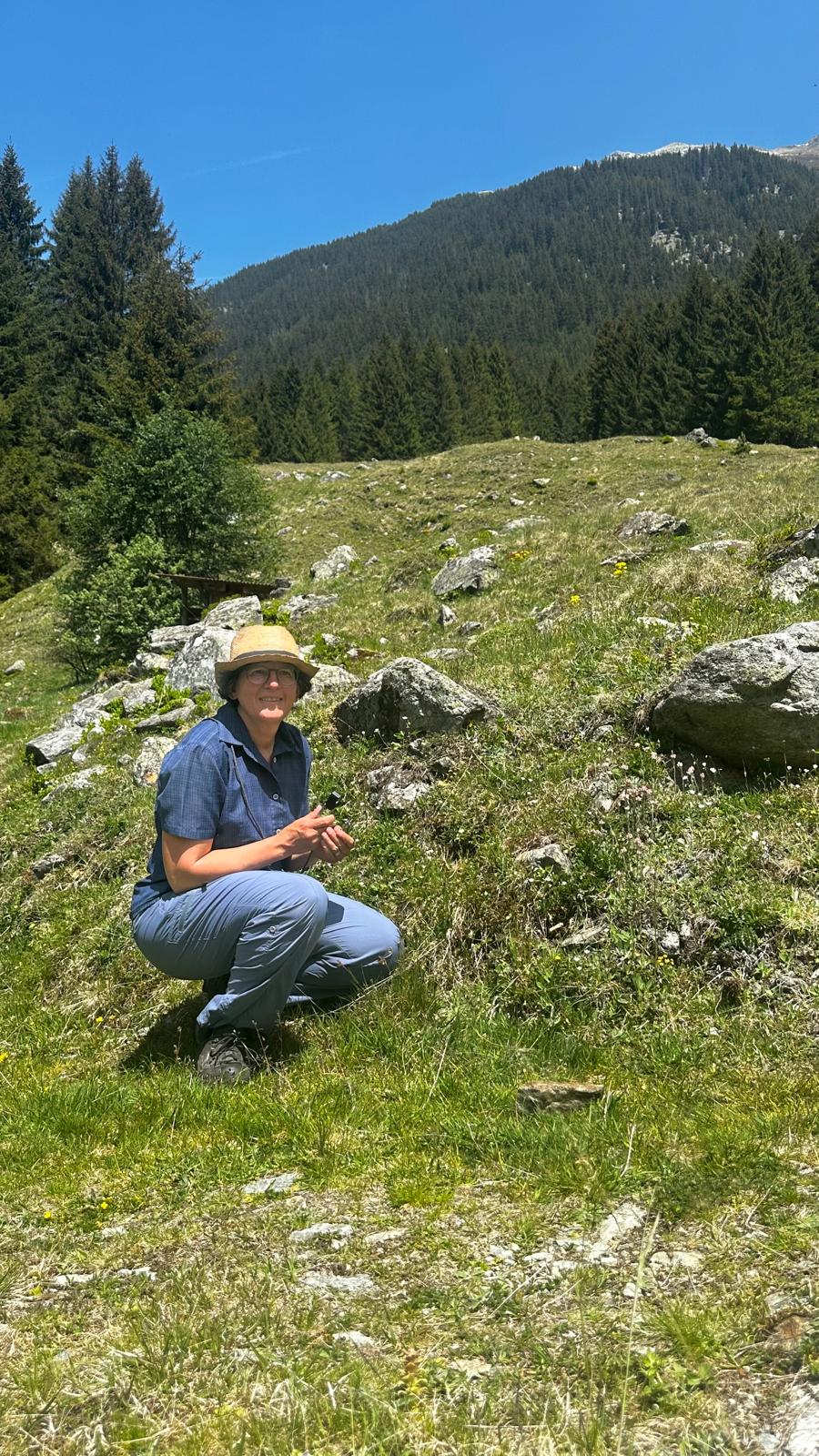
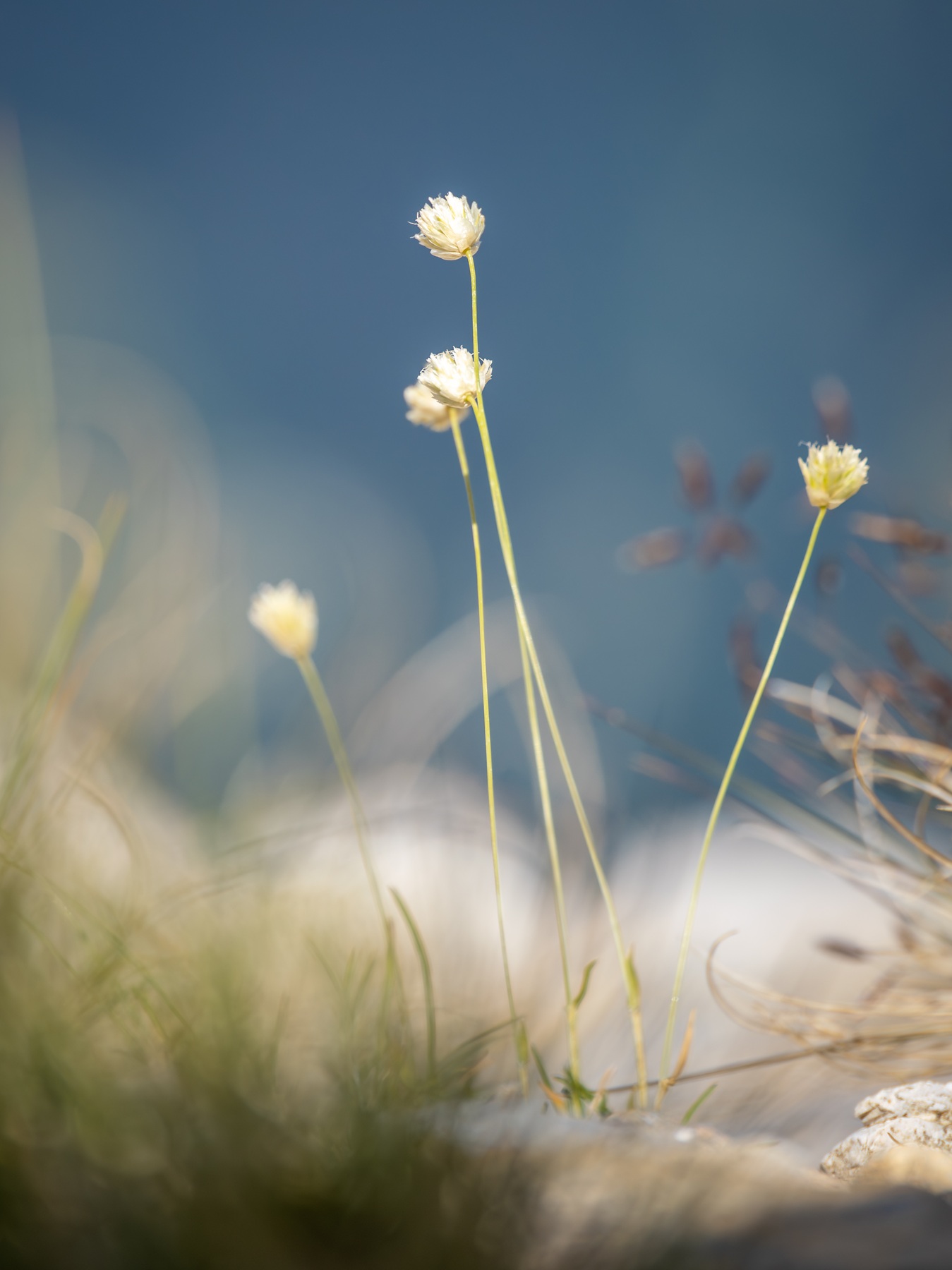
In addition to the large amount of new data, there were also some remarkable plant discoveries. Among the botanical highlights were the round-headed blue grass (Sesleria sphaerocephala), which in Switzerland is found exclusively on the Sassalb (see photo), as well as the saxifrage-like catchfly (Silene saxifraga) —despite its name, not a saxifrage but a member of the carnation family, which grows in Graubünden only at a few sites in Valposchiavo and Val Müstair. Other notable finds included the dwarf valerian (Valeriana supina), the Rhaetian Rapunzel (Phyteuma hedraianthifolium), the rock mayweed (Minuartia rupestris), Wulfen’s houseleek (Sempervivum wulfenii), and the two-colored sedge (Carex bicolor).
Quick Inventories and Missions with Special Appeal
Quick surveys have a special appeal: Often, just a few hours in the field are enough to fill in gaps in our knowledge. At the same time, even surveys conducted in close proximity to one another consistently surprise us with their very different species compositions.
But the “Discovery Missions” also offer exciting experiences. On Sunday, for example, it became strikingly clear just how differently such missions can unfold: The search for the sea sedge (Carex maritima) was successful after just a few moments. No sooner had the group arrived at the expected location than they discovered over 250 individuals of the species they were looking for. It was a completely different story with the Arctic rush (Juncus arcticus): Despite an intensive search, the species remained untraceable within the mission perimeter—until someone spotted it, of all places, directly across from the parking lot, just outside the perimeter.
Exploring Plant Diversity Together
It is precisely these kinds of experiences that define the mapping weekends—roaming through remote areas together, letting nature surprise us, and filling in the gaps in our knowledge.
A big thank you to all the volunteers for their hard work, as well as to everyone who organized and supported the mapping weekend.