
Flora Raetica relies on the dedication of its volunteers. Through their observations, they make an important contribution to documenting the flora of Graubünden.
In our portrait series, we introduce the people behind Flora Raetica.
Today: Simon Gysi, a software developer from Zurich. He has been involved with the project since 2022.
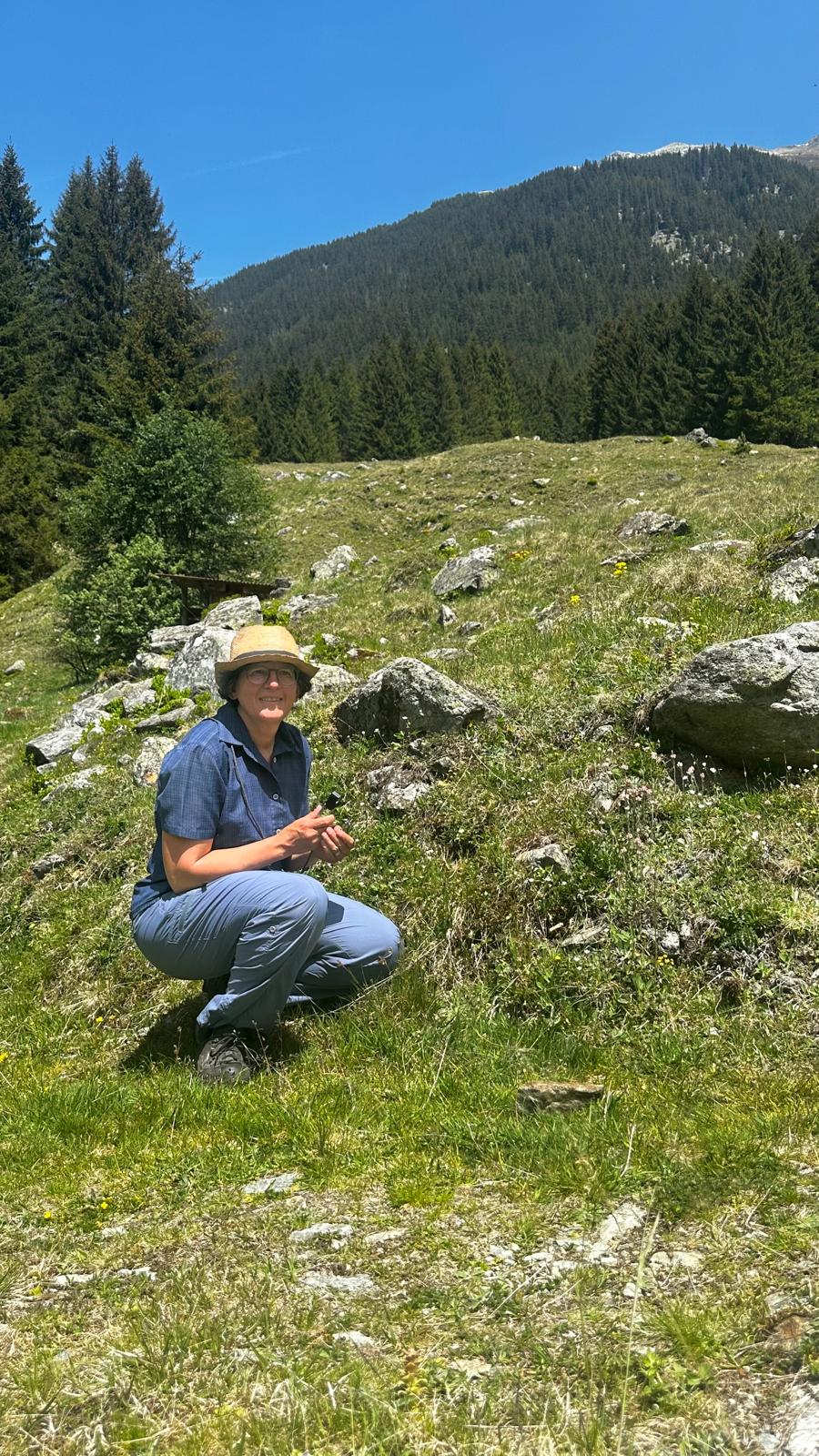
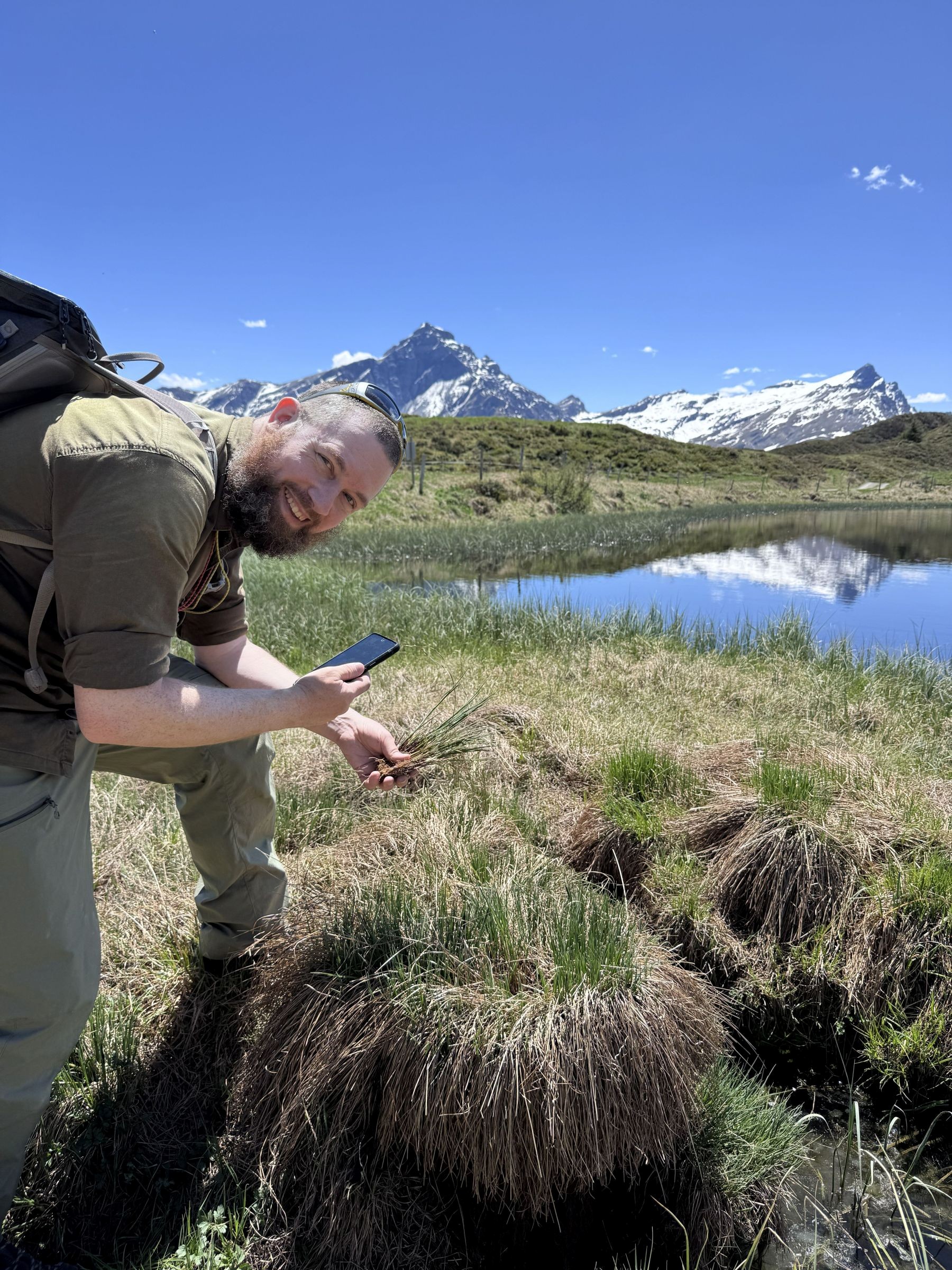
This portrait photo of Simon Gysi was taken on May 29, 2026, during the mapping weekend in the Safiental valley at the Bischola Pass. Photo: Ingrid Jansen.
Simon, how did you get into botany?
Thanks to my grandfather, I was interested in nature even as a child. While my enthusiasm for plants was limited as a teenager, I later often found myself drawn to colorful plants while mountain climbing—though I didn’t know what they were. On the recommendation of an uncle, I took BirdLife’s field botany course. When Flora Raetica was presented to the Zurich Botanical Society shortly thereafter, I didn’t have to think twice about joining.
Which season do you find most interesting from a botanical perspective—and why?
Except for winter, I find all the seasons interesting, and I always look forward to getting to know the plants as they go through their various stages. Different species can be seen depending on the season, so there’s always something new to discover.
Why are you involved with Flora Raetica?
Being outdoors and the “treasure hunt” bring me joy, and of course it’s also nice to be part of a community of like-minded people.
What is your contribution to Flora Raetica?
During the botany season, I enjoy working on rapid inventories or individual missions. During summer break, I usually visit remote regions and stay overnight in SAC huts to document the plants in the area. Outside of the botanical season, I support the project with my skills as a software developer. Among other things, I’ve created daily updated progress maps and lists of species still to be found, which are available on the website.
Is there a highlight or a particularly exciting discovery you’ve come across during your explorations for Flora Raetica?
A special highlight for me was confirming the presence of rock valerian (Valeriana saxatilis) during a Flora Raetica “Discover” mission near the Ringelspitzhütte. This species was last recorded there in 1954 by Ruben Sutter.
Would you like to support Flora Raetica, too? You can find all the information you need to get involved here.