Flora Raetica relies on the dedication of its volunteers. Through their observations, they make an important contribution to documenting the flora of Graubünden.
In our portrait series, we introduce the people behind Flora Raetica.
Today: Carmelia Arias Linares, secretary from Ilanz. She has been with Flora Raetica since 2024.
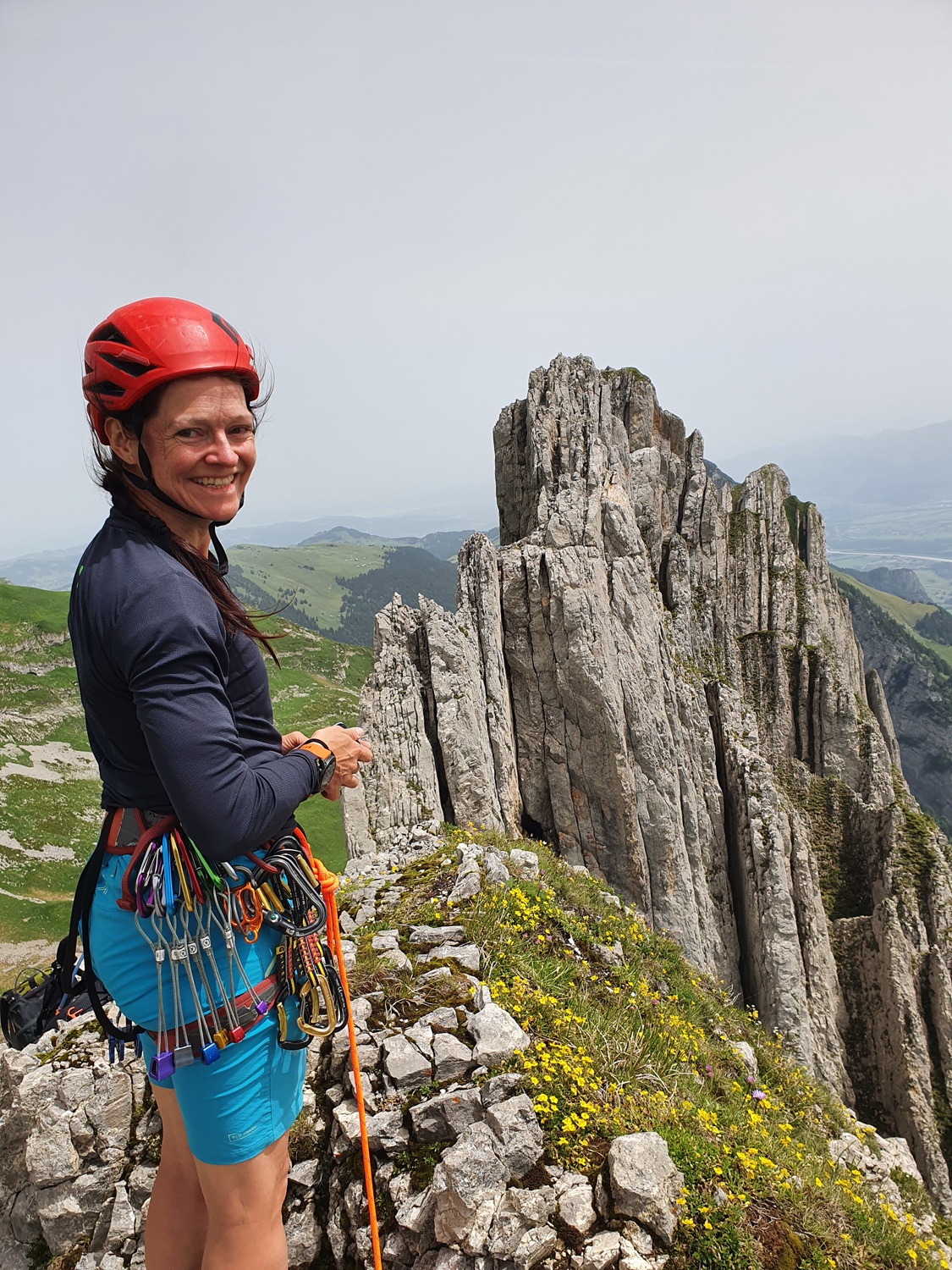
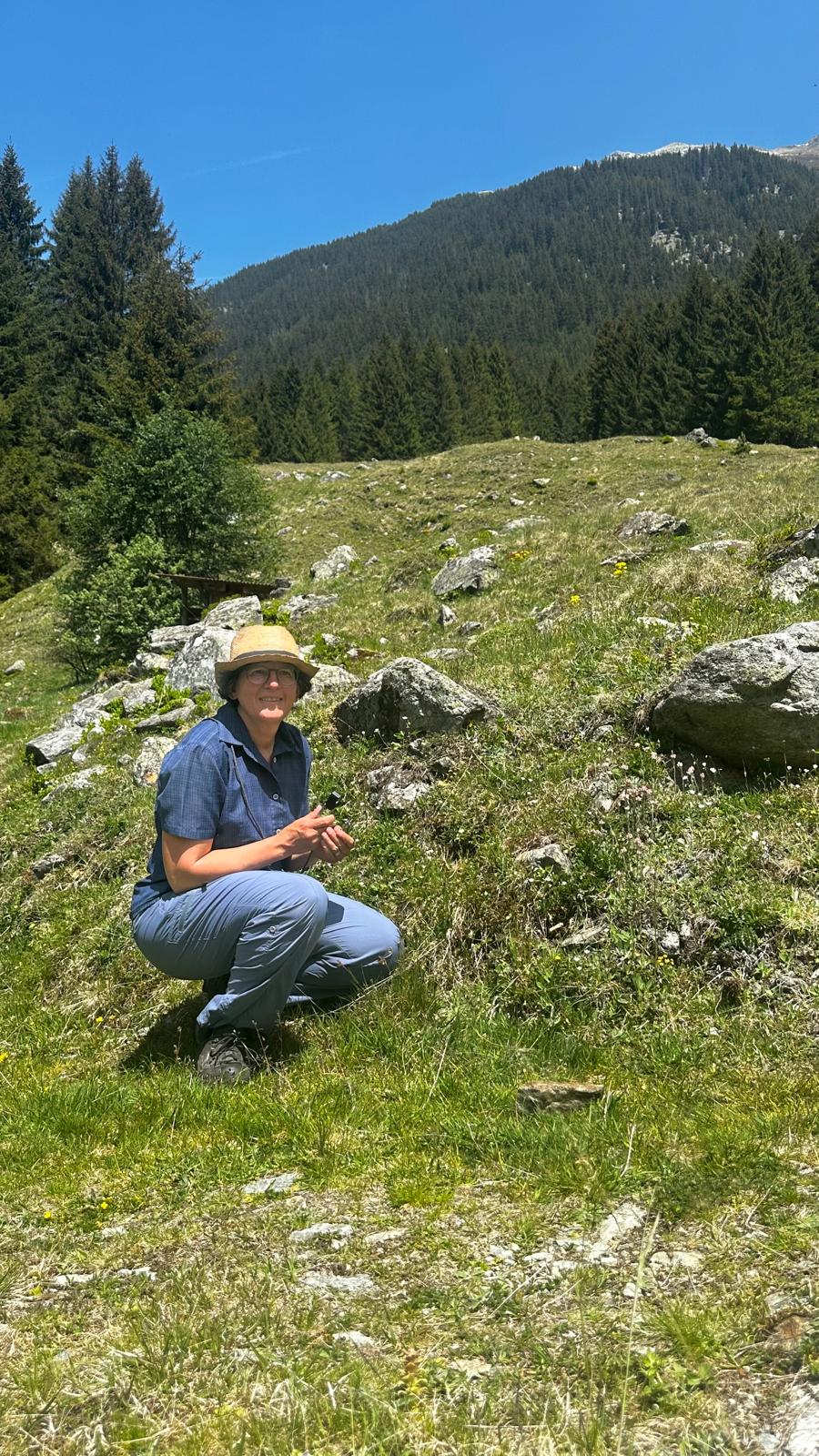
Pictured: Carmelia Arias Linares in Val Tenigia (Val Sumvitg). Photo: Salome Arias Linares.
Carmelia, what do you love about plants?
Their beauty, their diversity, and their structure, perfect down to the smallest detail. I never cease to be fascinated by observing plants through a magnifying glass. I’m also captivated by their development throughout the year—from germination, through flowering and fruit set, to preparing for winter. Even when dried out, many plants are still beautiful.
How did you get into botany?
I’ve always been passionate about plants. In 2024, I decided to take a career break and set out to learn more about the plant world. I started with a basic course in field botany and an introductory course at Flora Raetica.
Do you have a favorite plant that grows in Graubünden? Why that one in particular?
Ever since I was a child, my favorite flower has been the daisy (Latin: *margrita*, *flur per mintga meins*—a flower for every month). It grows all year round and never fails to delight me with its simple appearance and golden center. Two years ago, I discovered Trifolium arvense (field clover) and immediately fell in love with this plant. It’s really fluffy and soft, just like a rabbit’s fur. But to be honest: On every outing, I find a new favorite plant.
How did you first hear about Flora Raetica?
By chance—or was it fate? I had read a short article about the project in *Quotidiana* and then contacted the project coordinator, Ingrid Jansen. Then one thing led to another, and suddenly I was right in the thick of it.
What is your contribution to the project?
In the winter of 2025, I helped collect historical data for the Surselva region—an exciting and interesting task. Whenever I have time and my knowledge of plants allows, I also enjoy reporting plant sightings. I think it’s great that even small contributions count and are appreciated at Flora Raetica.
Was there a discovery or a moment outdoors that you’ll never forget?
At the end of June 2025, I was cycling along the Polenweg to harvest the last of the elderflowers. As I was parking my bike, my house key slipped out of my pants pocket. When I went to pick it up, I spotted a tiny, pink flower by the side of the path. Imagine my surprise when it turned out to be a small centaury (Centaurium pulchellum). The discovery was a pure coincidence, and I was overjoyed to have found such a rare species.
What does a successful day in the field mean to you?
When I don’t even realize it’s high time to go home, and when I’ve discovered yet another new plant.
What advice would you give to people who are interested in plants in Graubünden?
Join Flora Raetica, take a beginner’s course in field botany, and be curious and observant. You’ll make your first surprising plant discoveries right on your own doorstep.
Does Carmelia’s tip make you want to learn more?
Anyone who would like to deepen their knowledge of plants after completing the introductory course (or even without having taken the introductory course) can take the Advanced Course in Field Botany in 2027. The 1½-year Advanced Course in Field Botany combines in-depth botanical knowledge with extensive hands-on experience in the field and includes 14 half-day and full-day field trips as well as four half-day theory sessions.
Would you like to support Flora Raetica, too? You can find all the information you need to get involved here.