In the second half of September 2026, 20 interested participants gathered in the Lower Engadine to engage in an in-depth study of wild rose identification.
Constanze Conradin from Botanik Exkursionen, along with the two rose experts Rebekka Moser and Steffen Boch, led the workshop. In the theoretical portion, participants explored important identification characteristics such as the shape of the sepals, the hairiness and glands on the leaves and fruit stalks, and the texture of the spines. Using precise cuts with a razor blade, they even examined the style canal.
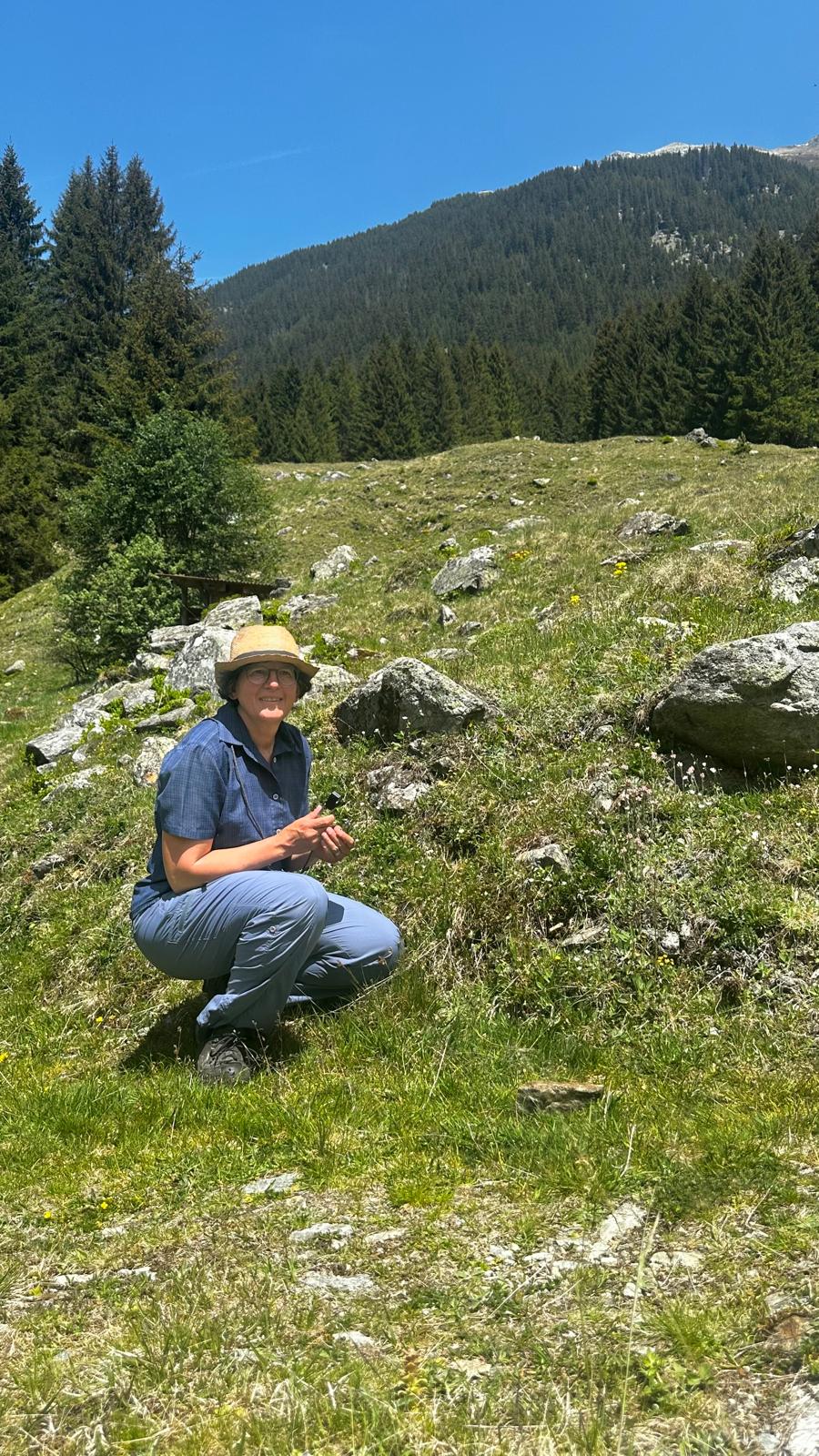
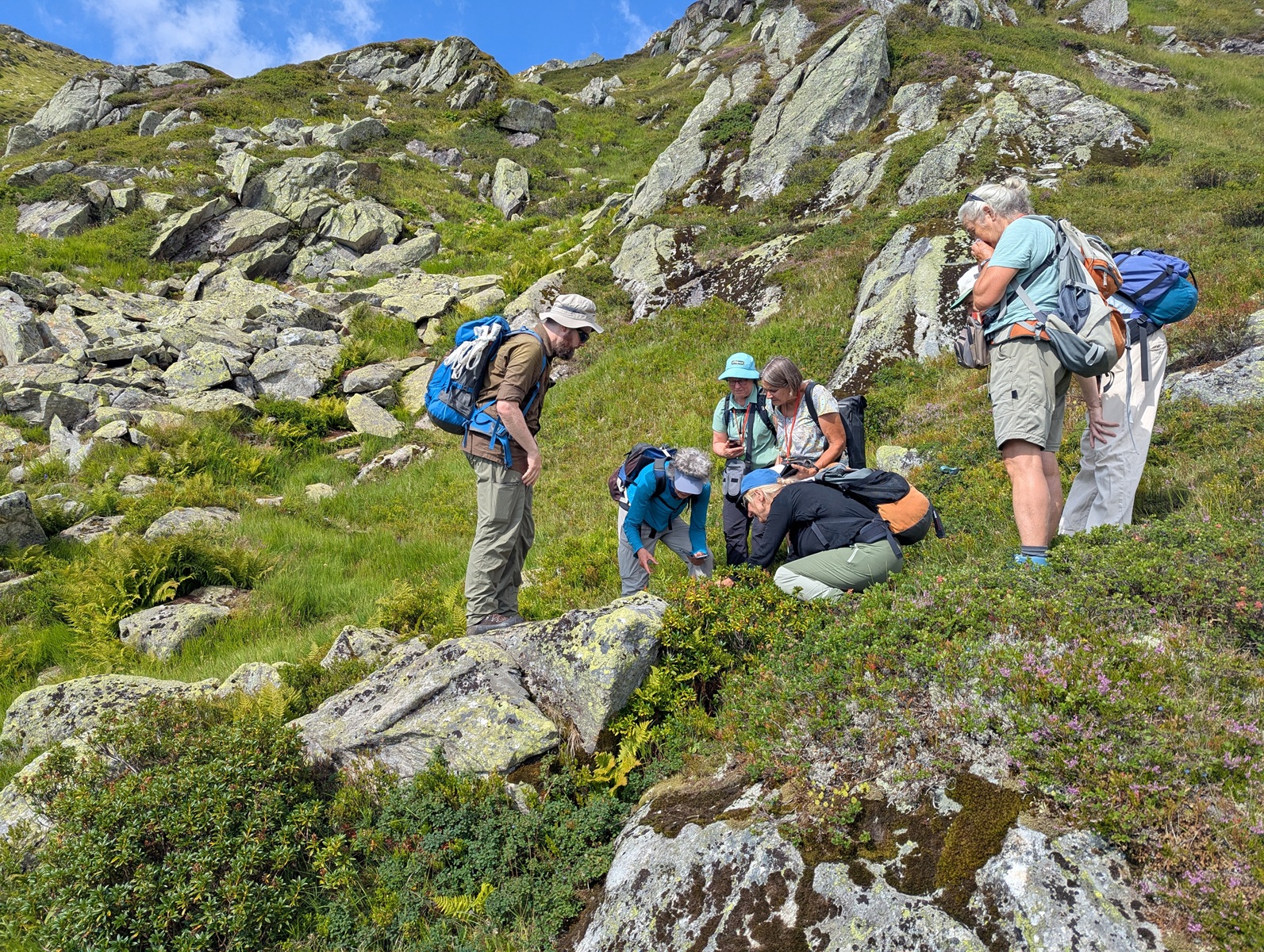
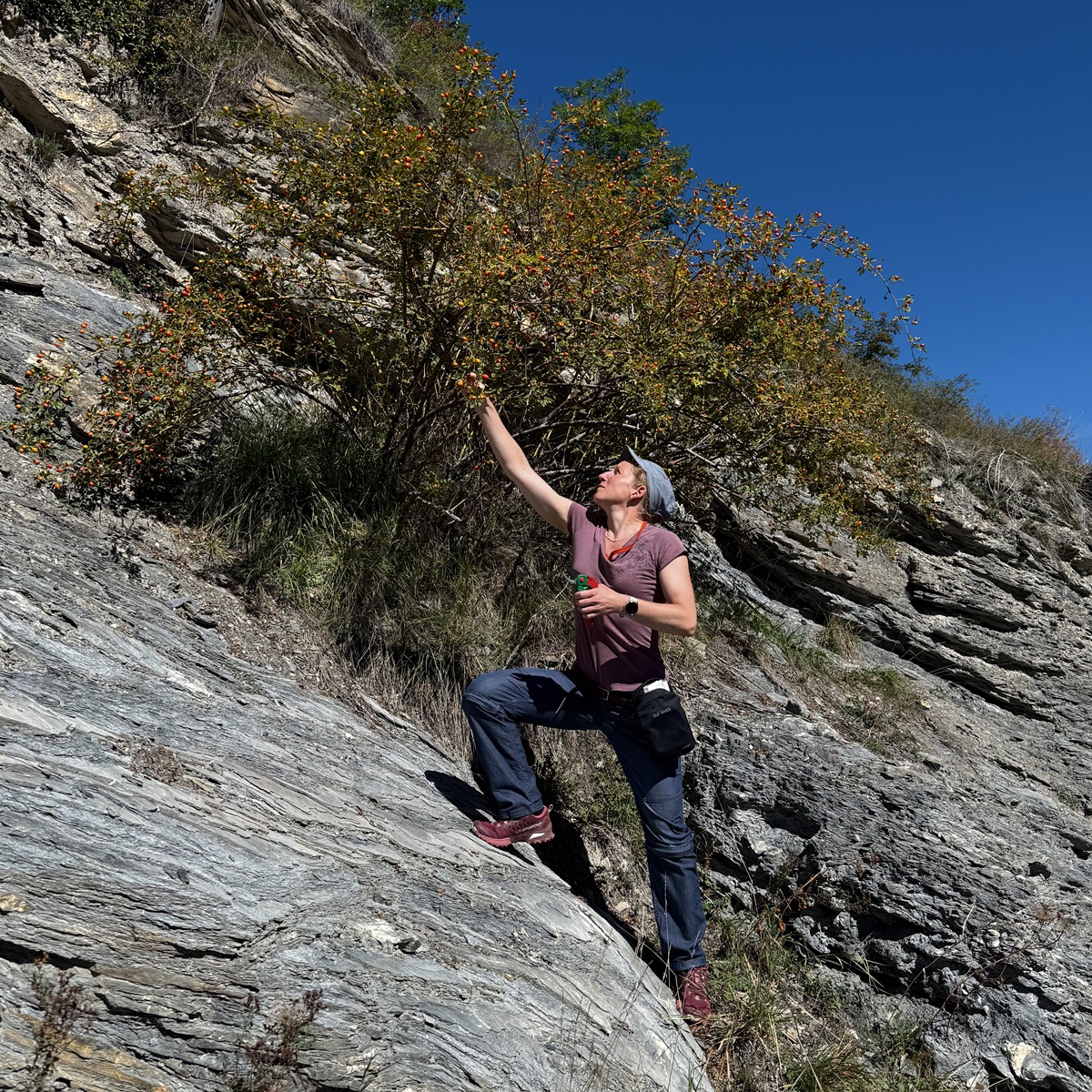
In the afternoon, they headed out into the field: During a short excursion, the participants were able to identify seven species of wild roses in the field.
The fact that the workshop motivated the participants is also evident from the sighting reports: While FloRae staff had already reported a good 450 rose sightings in 2026 up to that point, another 250 or so reports have been added since the workshop. Late summer and fall are particularly good times of year for identifying wild roses.
Flora Raetica welcomes further reports of wild roses in Graubünden!
The workshop was supported by the Fundaziun Pro Terra Engiadina.